Heim Feynman Event Generator
The modern Heim-Feynman Event Generator is a development from the latest Quetzal Generator developed during the 'Last War' against the Onouch'l Automatons, that saw the destruction of Cterin and the old Quetzal nations. It allowed the inhabitants of the Solar System to journey outside of the Solar System.
The Quetzal Generator was modified using advanced computational models of the Heim-Feynman theory as developed in the late 20th century and removed a spacecraft enveloped in a 75 Tesla chaotic boundary field from Einstein 4D space into the 8 dimensional Heim-Feynman space, propelling it towards its destination at superluminal speeds relative to Einstein space.
In its basic construction of the Heim-Feynman Event Generator a pair of superconducting rings that are held inside a magnetic field bearings and inside a rarefied argon atmosphere. Spinning the rings in opposite directions and inducing strong magnetic fields in them, up to 75 Tesla, generates a chaotic boundary field that transposes an object into Heim-Feynman space, and afterwards protects the object from the 8 dimensional effects by containing a portion of Einstein space.
By magnetically linking the Heim-Feynman Event Generators of multiple spacecraft together in a convoy, in a carefully predetermined formation, a multiple of the speed of a single spacecraft can be achieve, where the maximum speed is determined by the spacecraft with the least powerful Heim-Feynman Generator.
The Heim-Feynman Event Generator of the Type 25 is capable of speeds of up to 1642.5 times light speed ( ) during single operation, and up to 2463.75c (
 ) when linked into a Heim-Feynman Event Matrix with spacecraft of equal FTL capabilities. This maximum linked speed can be reached by a convoy of 20 spacecraft, while the FTL speed of a greater of lower number of spacecraft follows a Gaussian normal distribution.
The magnetic coils of the Heim-Feynman Event Generator can also be used to produce the magnetic field of the Shrivasta system.
Currently, there are no known theoretical performance limits of a Heim-Feynman Event Generator, though there are practical limits connected to power use of a Heim-Feynman Event Generator. The currently largest pracitcal vessels with a Heim-Feynman Event Generator are the Titanian GCUs, massive 25 million tonne Von Neumann vessels.
Another practical limit to the operation of a Heim-Feynman Event Generator is the Feynman Limit, the minimum distance from a systems primary where space time if flat enough for a successful translation into Heim-Feynman Space. For Sol, this distance is 5.5 AU.
However, many planetary bodies of a mass of higher than 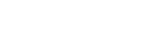 have an L1 and L2 point where the spacetime is flat enough to allow translation in and out of Heim-Feynman space. Movement to these points in Heim-Feynman Space is comparatively easy, but dependent on precise timing of the translation as inaccurate timing will cause the craft to translate out of Heim-Feynman Space at the Feynman Limit.
Within Local Space, the L1 and L2 point of a planetary body are commonly separated into arrival (L1) and departure (L2) zones to ease the strain on the local space traffic control environment. With many low priority transports taking the long and slow route from the Feynman Limit to their target, rather than using the Heim-Feynman Event Generator.